Five School Animals
TIGER Strength and tenacity. Strength: Ability to endure; Tenacity: Holding fast
LEOPARD Speed and power. Speed: Swiftness of motion; Power: Motivating force capable of producing great effect.
CRANE Grace and balance. Grace: Easy and refined motion; Balance: A condition of equilibrium.
SNAKE Suppleness and rhythmic endurance. Suppleness: Flexibility; Rhythmic endurance: a regular or measured flow of sustenance or tolerance.
DRAGON Fighting spirit and wisdom. Fighting spirit: Mental focus and emotional control during combat; Wisdom: Navigate challenges through adaptability, deep focus and harmonious action.

Belts and Dress Code
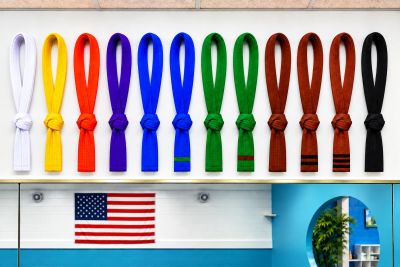
Earning Your Belt
The karate belt is more than just a piece of cotton-- it represents all the hard work and long hours of study and practice you have devoted. Your belt is your indication of your proficiency. Treat it with respect. When you come to class, put it on with one knee on the ground. If it comes undone during class, kneel and fix it. When class is over, kneel to remove your belt and fold it. Always show higher ranks the respect that is due them and their belt.
Your instructor will tell you when they believe you are ready to test for the next belt. It is not appropriate for the student to ask the teacher.
Belt Ranks
Belts are earned in the following order:
White - Yellow - Orange - Purple - Blue - Second Degree Blue - Green - Second Degree Green - Third Degree Brown - Second Degree Brown - First Degree Brown - Black
Black belts continue to earn additional degrees or dans as they continue their study.
White, yellow and orange belts are considered to be beginner levels.
Purple through second degree green are considered intermediate levels.
Third degree brown and higher are advanced levels.
Dress Code
A gi is a karate uniform that allows for freedom of movement. For regular classes, students may wear their gi pants and a Masters Studios t-shirt. Alternatively, they may wear their full gi with any shirt underneath the gi top. During class, watches, shoes and socks are removed for safety reasons.
For tests, demonstrations, and tournaments the full gi uniform should be worn. A school patch should be affixed to the left side breast of the gi top.
Shirts should be tucked in to pants. Clothes should be clean and in good repair.
Gi Colors by Belt Rank
Beginning level karate students will wear an all white gi. Students who have earned a purple belt and higher may wear either an all white or all black gi. Mixing of colors is not permitted until reaching second degree black belt.